Henrik Bergström - Nordic Voices of Influence
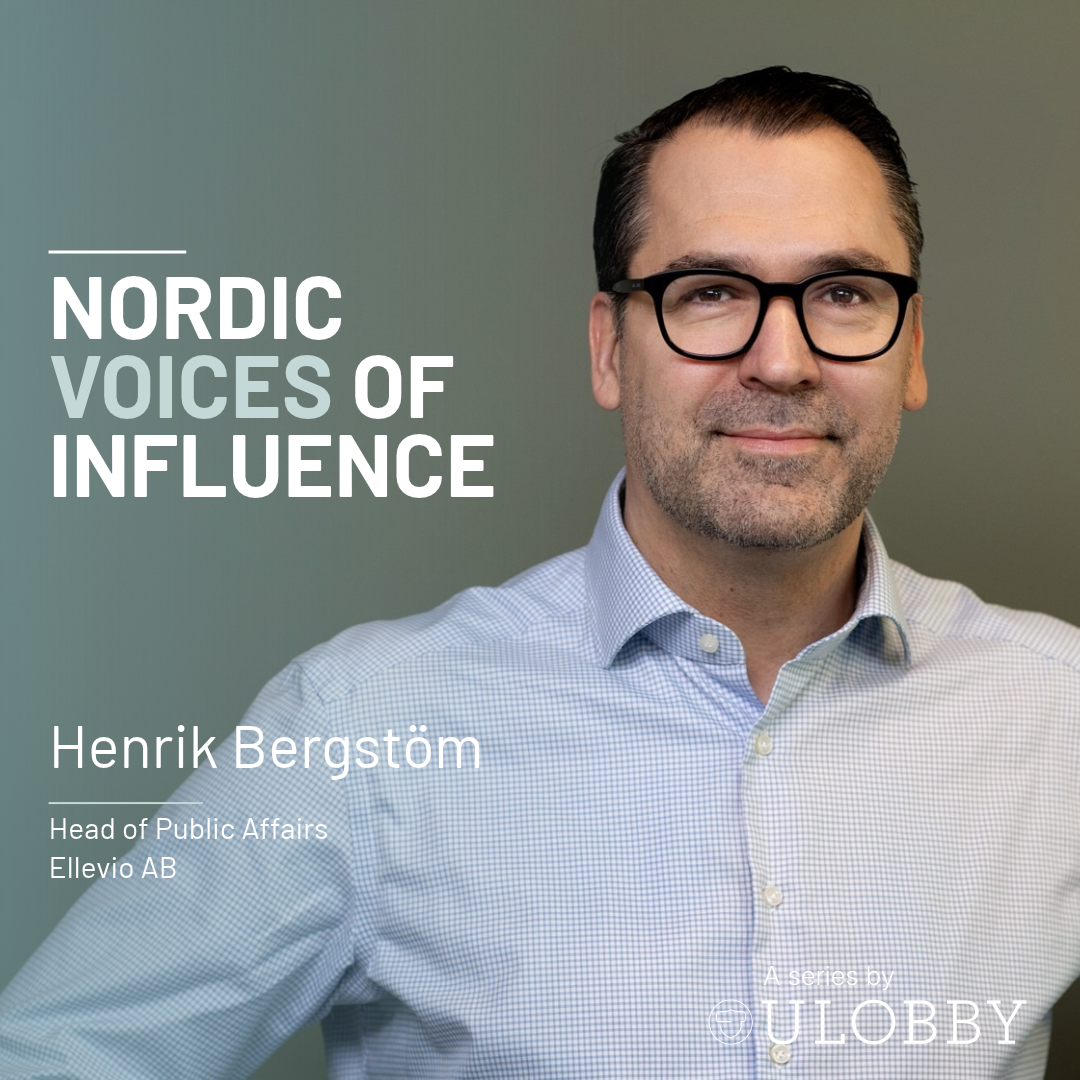
Henrik Bergström is Head of Public Affairs at Ellevio, a Swedish electricity network company.
How has the Public Affairs discipline developed in the last five years, and how do you expect it to develop in the next five years?
In the energy sector, Public Affairs work has become increasingly intertwined with policy areas such as competitiveness, growth and preparedness. Previously, energy policy was primarily about the green transition. Today, it is also central to society’s resilience and businesses’ ability to grow.
Against the backdrop of the geopolitical situation and the EU’s focus on competitiveness, I believe electrification will continue to be a high priority. The phase-out of fossil fuels will increasingly be driven by the need to strengthen resilience and competitiveness. As we move from parallel fossil-fuel-based and electrified systems towards an electrified energy system, Sweden and the Nordic countries have a clear competitive advantage thanks to our already almost entirely fossil-free electricity generation.
What should a CEO expect to get from a strong PA function?
In regulated sectors such as the energy industry, and particularly in electricity distribution, Public Affairs work is business-critical and a priority for the CEO. Political decision-makers and regulatory authorities have a significant impact on our ability to develop the business. We therefore need to maintain close relationships with both political decision-makers and public officials, while providing evidence-based and constructive input to help them navigate competing priorities. Examples include the need to expand the electricity grid while taking landowners’ desire to avoid disruption into account, or balancing customer costs against a high pace of investment.
If PA is to be more data-driven and measurable, what should we actually be measuring?
We need to measure how an issue evolves among both decision-makers and opinion leaders: what level of awareness exists, how the issue is prioritised, and what support different solutions receive. Simply monitoring developments in the legislative process is not enough. By that stage, many of the key decisions have already been made.
Successful Public Affairs work therefore requires clear objectives for the changes we want to achieve in people’s understanding, priorities and positions – both among those who make decisions and those who influence decision-makers. This work needs to begin long before a formal legislative process is initiated.
How do you use AI in your Public Affairs work today - and what must AI never replace?
We use AI in as many aspects of our work as possible: for monitoring the external environment and assessing relevance, summarising extensive source material, preparing presentations and transcribing meetings. We also use it to improve texts and tailor them to specific audiences. This brings significant efficiency gains and gives us more time for analysis and strategic work.
However, AI can never replace personal interaction. Building trust, understanding different perspectives and developing relationships will remain at the heart of Public Affairs work.
Who has taught you most about political influence, and what did you learn from them?
There are many skilled people working in political advocacy in Sweden, and I find it difficult to single out just one. One lesson they have in common, however, is that successful advocacy must be rooted in a societal challenge that needs to be addressed. You need to understand the problem, be clear about what you want to achieve and contribute constructive solutions. Above all, you need to be persistent. Political change takes time.
What is the most important personal quality for a Public Affairs professional in 2026, and why?
Adaptability – the ability to stay on course while circumstances are constantly changing. The pandemic, Russia’s invasion of Ukraine, the energy crisis and economic downturn in recent years, followed by US tariffs and developments around the Strait of Hormuz, have required us to continuously reassess both our ways of working and our priorities. As the external environment changes, so does the political agenda. We need to be able to quickly understand what these changes mean for the business and adapt our work accordingly, while remaining committed to our long-term goals.
Share this article
The Ulobby platform provides all the tools needed for managing issues and stakeholders and for measuring and evaluating impact.
Get started